

Healing Beyond Addiction: My Journey through Drug Rehabilitation “Drug Rehabilitation” — just saying these words brings a storm of emotions within me. As a human, I have faith in humanity and trust in God’s mercy to everyone in trouble, and I have seen how substances like wine, cigarettes, and drugs steal not just health, but peace, relationships, and the very soul of each person affected by them. I still remember my childhood friend Mohan, once the most cheerful boy in our neighborhood. These things entered his life just like that for him: a cigarette shared among friends, a little drink at college parties. Slowly, this becomes his dependency to get rid of stress, of failures from life itself. Within two years, Mohan’s dreams faded behind the smoke — his health worsened, his family lost hope, and his once bright eyes turned hollow. Looking at him taught me a painful truth: addiction does not ask about your religion, status, or strength; it quietly enslaves anyone who lets temptation win even once.
Over the years, I realized that rehabilitation — or recovery from such addiction — is not just about breaking a habit. It is the self-realisation, a process of cleansing both body and spirit. It demands patience, faith, and honest self-reflection. The real victory happens not when one says, “I have quit drugs,” but when one can say, “I have found peace without them.” At that moment, true
transformation begins. Such things can start with the support of a true guide, one whose dedication is only to serve selflessly for the healing, for the betterment of society.
The purpose behind sharing my journey and reflections is simple — for people like me to realise the reality that keeping distance from all intoxicants is the first step toward lasting happiness. With discipline in life, faith in the Almighty, and support from family, NGOs, and spiritual bodies, anyone can get on the path of healing. Many people are struggling with a silent epidemic. According to recent data by the World Health Organization and India’s National AIDS Control Organisation (NACO), millions of youngsters are getting into drugs every year, with a growth rate of 6-9% annually. The number is not just a statistic — it reflects broken homes, shattered futures, and lost humanity.
So, tell me, if we are dependent on drugs for happiness, for confidence, for a temporary peace, for facing the low, then how can we uplift ourselves spiritually, which is the only pathway to all that I just said about? The answer, my friend, begins within yourself. What will you choose: drugs or yourself, your family, and your faith?
Spiritual Dimensions of Drug Rehabilitation
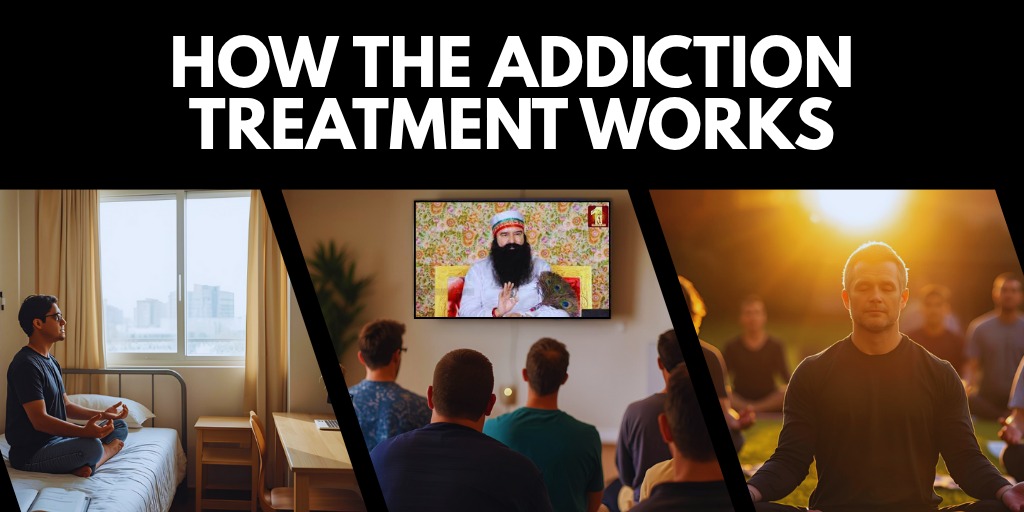
The spiritual side of drug rehabilitation has always provided me with the hope beyond what medicines or counselling alone could offer. My trust in God Almighty only grew deeper when I realized that nearly everything that I just learned about — from Hinduism and Sikhism to Islam, Christianity, Jainism, and Buddhism — discourages intoxication in the clearest terms. Hindu scriptures caution us against “tamasic” substances, including alcohol and narcotics, as they cloud wisdom and invite ignorance. In Sikhism, the Rehat Maryada, or code of conduct, strictly prohibits any intoxicant, considering the body as God’s sacred temple to be honored and kept pure. Similarly, the teachings of Prophet Muhammad in Islam command believers to abstain from all intoxicants, describing them as the root of evil and misguidance. Christianity, while not unanimous in the details, universally agrees that drunkenness is a grave sin, and Buddhism’s fifth precept calls for complete abstinence from anything that clouds the mind. A verse from the Guru Granth Sahib echoes in my mind: “The body is the temple of the Lord; to defile it with intoxicants is to dishonor the divine within.” It reminds me how true transformation requires discipline of both body and soul. The story of Mohan, a neighbor who is gravely addicted to alcohol, stays with me. His family tried many clinics, but it was a turning point when he began meditation and prayer under the guidance of Baba (Saint) Ram Rahim. Through the method of meditation and following his principles, his mind found clarity, and his cravings faded, replaced by an inner strength he never knew.
India’s renowned spiritual organizations inspire countless similar recoveries.
The Spiritual Congregations of Dera Sacha Sauda at many of the places in India, led by Baba Ram Rahim, have de-addiction programs featuring the DEPTH Campaign, supporting each individual facing such drug abuse. Getting rid of such things with the method of meditation and following a few of the principles, reporting high success rates for those suffering from substance dependence. Secondly, the Art of Living, led by Sri Sri Ravi Shankar with Sudarshan Kriya and deep breathing techniques, also supports people to stay far from addictions. Many people like Dr. Krishan Lal, once trapped in addiction, found complete healing and now help others to sobriety through these spiritual approaches. The Dera Sacha Sauda’s Nasha Mukti Centres, the Brahma Kumaris’ Raja Yoga Points, and the holistic therapy centres at Patanjali Yogpeeth integrate yoga, group meditation, and natural healing, providing a nurturing environment far beyond mere clinical treatments.
If I have learned anything, it is that surrender to the Supreme Power – through prayers, meditation, and moral living – can become the strongest form of rehabilitation. Spiritual awakening helps us not only to resist temptations but also to rediscover our purpose. After all, if our souls are made in the image of God, then why let these momentary pleasures draw us away from His light? Isn’t true liberation found in breaking every chain — especially those forged by addiction? Would I not trust the guiding hand of faith and community to lead back to the path of purity and peace?
Role of Organizations and NGOs in Healing Beyond Addiction
The Organizations and NGOs serve as the backbone of drug rehabilitation, giving millions a second chance at life when hope seems lost. During a recent visit to a local rehabilitation center connected with Dera Sacha Sauda Sirsa, I witnessed firsthand the compassion and camaraderie that define such places. The meeting was filled with individuals from varied backgrounds, each courageously sharing their pain and progress. Social workers acted not as mere counselors, but as friends—offering guidance, lending a patient ear, and restoring lost confidence in addicts. What struck me most was the tireless effort of volunteers, many of whom were themselves former addicts who had found meaning in service. The Dera Sacha Sauda Sirsa and its various branches around the nation (India) and even the whole world have transformed addiction recovery since their arrival with countless efforts in the form of campaigns, spiritual congregations, awakening through documentaries and movies, etc. These efforts and movements involved an integrated program of connecting people with spirituality, which blends self-accountability, spiritual growth, and continuous peer support. The initiatives are making healing possible in even the smallest towns; meetings in local languages further break stigma and foster genuine connection, while the followers’ universal support lets people from all faiths and backgrounds stand together in their resolve to quit.
On a national scale, the Nasha Mukt Bharat Abhiyan campaign has emerged as a beacon of mass awareness and prevention. Launched by the Ministry of Social Justice & Empowerment, this initiative now covers hundreds of vulnerable districts, actively involving youth, women, educational institutions, and civil society. It offers counseling, community outreach, helplines, and capacity building, having sensitized more than 9.3 crore people—including over 3 crore youth and 2 crore women so far. Various welfare societies and government-backed programs also run Integrated Rehabilitation Centres, peer intervention hubs, and awareness drives, often in partnership with local NGOs.
The need is urgent.
Recent studies show youth substance use is surging: in some rural areas, up to 65% of adolescents have used drugs, while national surveys found 32.8% of youth reported using substances—often starting well before adulthood. The consequences span health crises, mental breakdown, social isolation, and family breakdown. Dr. Pearlsy Grace Rajan, a leading de-addiction expert, emphasizes that heroin, prescription drugs, cannabis, and even inhalants are rapidly ruining promising lives, robbing families of their future and causing financial as well as emotional devastation.
Are we as a community doing enough? Can a nation prosper if the very roots—its youth and nw even the children—are being poisoned by addiction? The fight for recovery is not just for the afflicted but for all of us, asking that we lend our time, understanding, and support to turn the tide together.
Keeping Distance from Wine, Cigarettes, and Drugs: A Common Man’s Perspective
Keeping distance from wine, cigarettes, and drugs has become a cornerstone of my journey toward self-respect and fulfilment. Reflecting on my own early years, I now recognize how tiny indulgences—just a sip at a party or a casual puff after work can quietly pave the path to lifelong dependency. Addiction rarely knocks on the door with a warning; it creeps in, turning what once felt like harmless fun into an inescapable habit. Many friends who once believed they could “control” their drinking or smoking now struggle deeply to regain that freedom, their stories serving as silent lessons every day.
Among the people I have met, some have inspired me with their courage to refuse even the first step. Sandeep, a neighbor from my hometown, always refused to join college celebrations involving alcohol, despite peer pressure. When asked why, he would quietly say, “If I don’t plant the seed, how will a weed ever grow?” Another friend, Sameer, lost his uncle to lung cancer. Moved by that tragedy, he promised himself as a child to never touch a cigarette—and decades later, that promise has guided his every decision. These ordinary people, with ordinary wisdom, have demonstrated that early decisions can protect a lifetime. This leads me to wonder: do we ever pause to consider the consequences of casual choices? Is a momentary thrill worth the chains of addiction? Every reader must ask—what “examples” are we setting for the next generation, and which path do we want children to walk? Such questions have helped me renew my own resolve again and again.
In my search for preventive tools, I discovered the transformative power of replacing bad habits with life-affirming choices as directed by Baba Ram Rahim in most of the events organized at regular intervals. Practicing yoga each morning calms the mind; playing sports releases stress and fills one with healthy energy; meditation connects us back to our inner strength; charitable activities replace emptiness with meaning. Families that spend time together, communicate openly about substance abuse, and cultivate spiritual routines offer children a powerful shield against outside influences.
Ultimately, it is through social and family education that the seeds of wisdom are planted. Teaching children openly—not just with warnings, but with compassion and real-life stories—ensures they understand not only the dangers but also the possibilities of a substance-free life. Isn’t our greatest responsibility to protect the innocence and promise of youth, so that they may never have to
struggle as many in our generation do? These preventive steps are keys to a healthy, joyful, and addiction-free society.
Conclusion – Spiritual Drug Rehabilitation through Dera Sacha Sauda Sirsa
The journey of overcoming addiction is deeply rooted in faith, discipline, and the power of community service. Spiritual drug rehabilitation goes beyond just physical detoxification; it involves healing the soul and mind through surrender to higher consciousness and positive actions. At the heart of this transformative journey stands Dera Sacha Sauda Sirsa, led by Saint Dr. Gurmeet Ram Rahim Singh Ji Insan, whose tireless efforts have been guiding thousands towards lasting freedom from substance dependence.
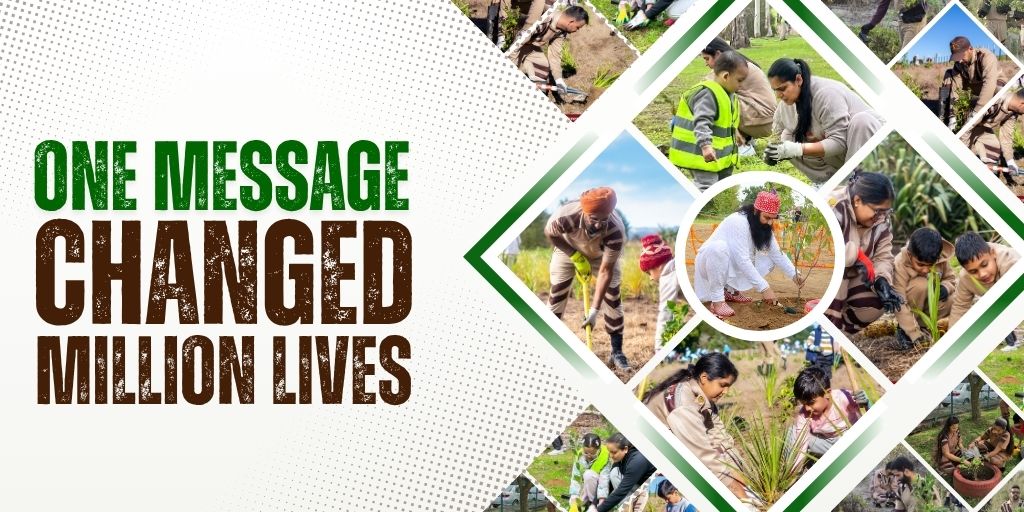
Since its inception in 1948, Dera Sacha Sauda has been a beacon of hope and rehabilitation, successfully helping over 65 million people pledge to give up drugs, alcohol, and tobacco for a healthier life. Under the visionary leadership of Saint Dr. Gurmeet Ram Rahim Singh Ji Insan, this socio-spiritual organization has expanded its reach with initiatives like the DEPTH (Drug Eradication Pan-India Through Health and Meditation) campaign, teaching meditation techniques that empower individuals to regain control over their minds and bodies. Many have experienced remarkable recoveries within just seven days through a combination of meditation, healthy lifestyle changes, and ongoing community support. The organization’s holistic approach not only promotes physical healing but also fosters spiritual growth and mental resilience, crucial for true rehabilitation.

The message Dera Sacha Sauda spreads is clear: addiction recovery is possible through faith, spiritual healing, and unwavering discipline. It inspires transformation not just at an individual level but within families and communities as well. The organization’s work embodies the essence of rehabilitation — a process of restoring dignity, hope, and purpose. Their efforts prove that with the right spiritual environment and social unity, one can break free from the darkest chains of addiction.
As someone who believes deeply in the power of divine faith combined with human will, I hold this truth close to my heart: together, as a society rooted in compassion and spiritual strength, we can build a sober, healthy, and compassionate nation. The road to a drug-free life is certainly challenging, but it is not impossible — when guided by light, love, and the legacy of care exemplified by Dera Sacha Sauda Sirsa, transformation becomes a natural reality for all who seek it.
May this message inspire every soul reading this to embrace the path of faith, seek help when needed, and contribute to the noble mission of creating a world free from the bondage of addiction.
References
1. We have lost jobs, homes: Alcoholics Anonymous. (2023,January 22). Times of India.
2. Take a pledge | Nasha Mukt Bharat Abhiyaan. (n.d.). Ministry of Social Justice and Empowerment.
3. SPYM | NGO https://spym.org (2025, October 5).
4. Mega Anti-Drug Addiction and Rehabilitation campaign run by Baba Ram Rahim Ji
5. 2021, December 31 Join the DEPTH Drug Addiction Campaign.

3 thoughts on “Healing Beyond Addiction”