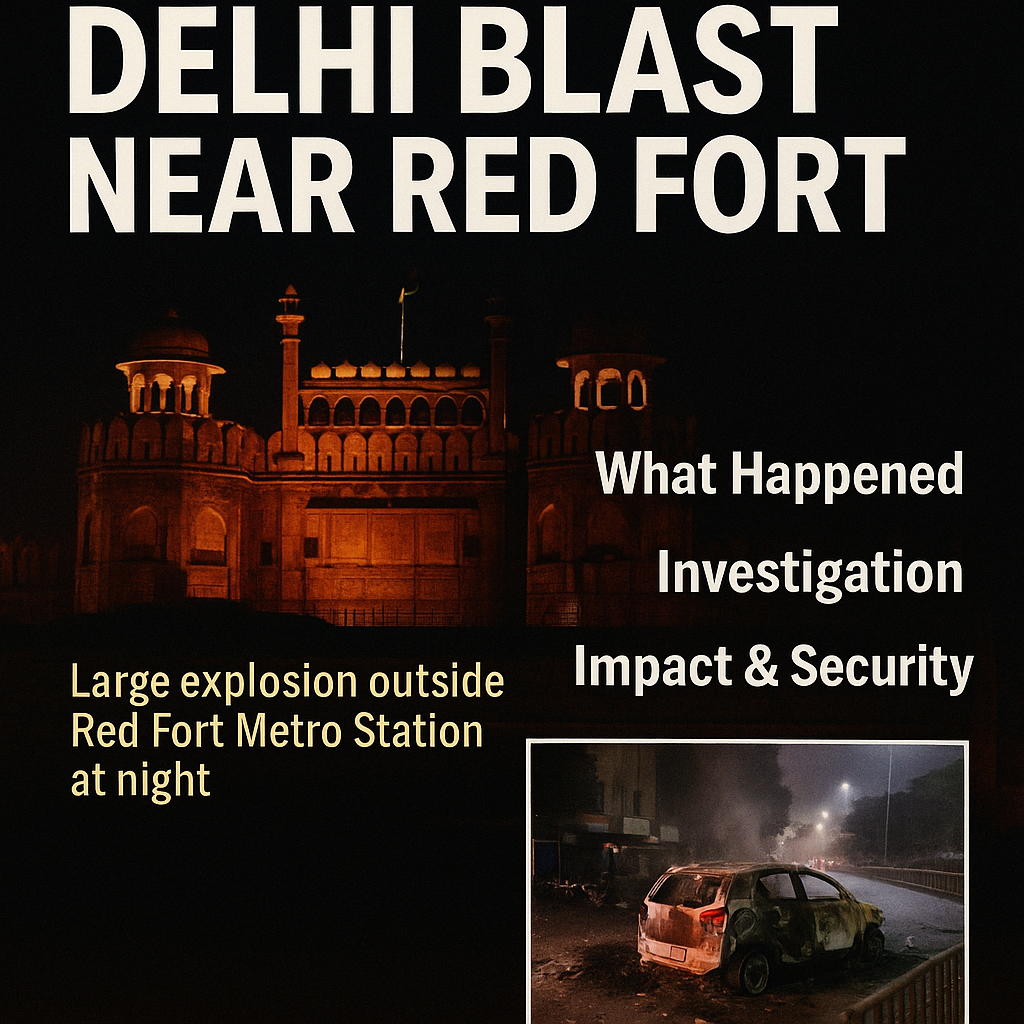
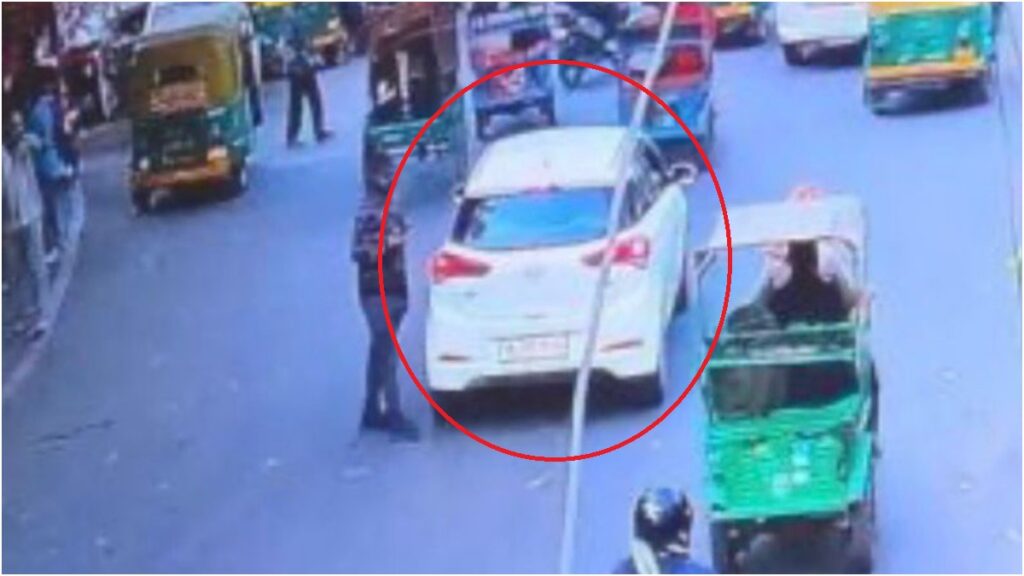
A major explosion shook Delhi near the historic Red Fort, triggering panic, casualties, and nationwide shock. Soon after, unverified reports of delhi blast began circulating that the terror group Lashkar-e-Taiba had claimed responsibility for the attack.
Although official agencies have not confirmed this, the possibility of such a claim immediately raises a big question:
“Kya ab India–Pakistan war ho sakti hai?”
This article explores this scenario in depth, focusing on:
- Why the claim matters
- India’s possible response
- Pakistan’s diplomatic stance
- The military balance
- Global pressure
- What experts believe about war likelihood
- Long-term implications for South Asia
This is an analytical exploration, not a confirmation of any government statement.
1. The Delhi Blast: A National Security Shock
The blast happened near one of India’s most symbolic locations:
Red Fort → Independence Day speech venue → high-security zone.
Any terror attack in Delhi has serious implications, but a blast near Red Fort sends a far deeper message:
- Targeting national identity
- Challenging state authority
- Testing India’s intelligence networks
- Provoking political reactions
If a Pakistan-based militant group claims responsibility—even unofficially—the tension automatically rises.
2. Lashkar Claim: Why It Is a Big Deal
Lashkar-e-Taiba (LeT) has been linked to several past attacks in India, including Mumbai 26/11.
A claimed involvement (even hypothetically) triggers:
1. Diplomatic tension
India may demand explanations from Pakistan.
2. International scrutiny
UN, US, UK, EU monitor such claims closely.
3. Military alertness
India raises security on borders, airbases, and metros.
4. Political pressure
Public demands a strong response.
So even a claim—without evidence—has immense impact.
3. India’s Possible Response Options
Experts usually describe five response pathways (short of full-scale war).
A) Diplomatic Pressure
India can:
- Submit evidence to international bodies
- Demand action against Lashkar networks
- Reduce bilateral engagements
B) Economic & Trade Restrictions
Though India–Pakistan trade is limited, India could push for:
- FATF pressure
- Sanctions via friendly countries
C) Covert Operations
India may intensify intelligence missions targeting terror modules.
D) Cross-Border Counterstrikes (Surgical Strikes)
After Uri (2016) and Balakot (2019), India has shown willingness for:
- Precision air strikes
- Special forces operations
E) Full-Scale War
This is the most extreme outcome and least likely—but always part of public debate.
4. Will India and Pakistan Actually Go to War?
Short Answer:
Full-scale war is very unlikely — but small-scale military action is possible.
Here’s why:
5. Why Full-Scale India–Pakistan War Is Unlikely
1. Both Countries Are Nuclear Powers
Nuclear nations avoid full war because escalation risks national destruction.
2. International Community Will Intervene
Countries like USA, China, UAE, UK, and organizations like UN would pressure both sides to avoid escalation.
3. Economic Impact Would Be Devastating
War affects:
- Fuel supply
- Trade
- Industry
- Stock markets
- Public finances
4. Pakistan’s Internal Challenges
Pakistan faces:
- Economic crisis
- IMF pressure
- Political instability
A war is beyond its capacity.
5. India’s Global Interest
India is focused on economic growth, manufacturing, FDI, and global diplomacy.
A major war would harm these priorities.
6. What Is More Likely Instead of War?
✔️ 1. Targeted Airstrikes (Like Balakot 2019)
If enough evidence emerges connecting Lashkar to the blast, India could conduct surgical operations.
✔️ 2. Stronger Counter-Terror Laws & Crackdowns
NIA, IB, Delhi Police, and military intelligence may intensify operations.
✔️ 3. Diplomatic Isolation for Pakistan
India may push for:
- FATF blacklisting
- UN sanctions
- Reduction of international aid
✔️ 4. Cyber Offensives
Silent but powerful digital retaliation.
7. Could Skirmishes Still Happen?
Yes.
Border clashes, artillery exchanges, and airspace violations are possible in high-tension periods.
But these usually remain controlled and do not turn into full war.
8. Pakistan’s Expected Reaction if Lashkar Is Blamed
Generally, Pakistan’s government denies links to Lashkar.
Expected statements include:
- “No involvement in terror activity.”
- “India is blaming Pakistan without evidence.”
- “We support peace; terror groups are non-state actors.”
Pakistan may also:
- Call for UN intervention
- Strengthen border forces
- Raise diplomatic objections
9. Global Impact of the Lashkar Claim
If the claim gains traction, the international community may respond:
1. United States
Pressures Pakistan to act against terror groups.
2. Gulf Nations
Call for peace due to diaspora and trade.
3. China
Balances between supporting Pakistan and avoiding regional instability.
4. United Nations
May call for investigations and issue statements.
10. Indian Public Sentiment
Social media trends after such events typically include:
- Demand for retaliation
- Concern for national security
- Anger against terror groups
- Fear for future attacks
Leaders must manage both public emotion and international diplomacy.
11. Long-Term Security Lessons for India
The blast—whether Lashkar claimed or not—highlights:
✔️ Gaps in city surveillance
✔️ Need for AI-based vehicle monitoring
✔️ Better border intelligence
✔️ Stronger cyber tracking of terror networks
✔️ Faster emergency response systems
12. Will India–Pakistan War Happen? Final Expert View
❗ Full-scale war = UNLIKELY
❗ Border skirmish / airstrikes = POSSIBLE
❗ Diplomatic pressure = CERTAIN
India will prioritise:
- Security
- Diplomacy
- Isolating terrorists
- Targeted responses
A complete war is only an extreme-case scenario.
🎯 Conclusion
The Delhi blast, and the hypothetical claim by Lashkar, has raised major concerns about national security and regional stability. While the situation demands seriousness, history and geopolitical realities suggest that a full India–Pakistan war is highly unlikely.
India may respond strongly—but strategically.
The world will watch closely, and pressure both nations to maintain stability.
This is a time for truth, careful investigation, and precise action—not panic.